The latest round of IRS (Indian Readership Survey) results are in recently. At the outset, these survey figures try to give an idea of how many and what category of readers read a particular magazine, newspaper or listen to a particular FM radio channel. Millions and millions of rupees are spent out of marketing departments based on these readership surveys. But what is the ground reality? What is the ROI? and what is the way forward?
—–
Background
If you’re a marketer, obviously you need some kind of barometer to judge whether the monies that you’ve spent or running advertisement spots on TV, newspapers, magazines or online has worked for you or not. But since it’s almost impossible to measure that whether every single person who’s watched the latest advertisement for Toyota Corolla during latest FIFA world cup has been positively influence by the advertisement or not, Everyone from the marketers to media agencies have decided to spend money based on an approximate estimation of number of people who watched the advertisement; thereby believing that
If a person has watched my ad –> He/she is more likely to buy the product.
However, in reality, it hardly happens. The person might simply also
1. Skip: Not see the advertisement even though he flipped through the newspaper
2. Dislike: hate the advertisement – hence, deciding against buying your brand.
3. Ignore: be uninterested in the advertisement and ignore it
4. Irrelevant: not be the target consumer for the brand being advertised. A married man is out of marriage market, and hence is unmoved by matrimonial advertisements. (Yes, it is true)
Still this game of pouring billions of dollars into advertising continues. Why? Because there is no sure-shot way of measuring the ROI. Yes, some of you might try to argue that Digital is the panacea of all these evils but at the end of the day.. it also has its limitations. Also, just because something can be measured better does not make it better impact medium. Would you like watching the latest round of FIFA matches / IPL matches on your 42 inch HDTV or a tiny youtube screen on your laptop?
What is the reality like?
Since I’m currently working in the Indian Media & Entertainment industry, I’m much more aware of inner workings of the industry. IRS conducted by MRUC (Media Research & User council) surveys close to 250,000 readers and tries to find out about their lifestyle, their household habits, and the kind of publications, magazines and media channels they consume.
This is what the IRS mainly aims to measure:

However, the survey faces three sets of problems:
Survey respondents
Reaching out to the Affluents: IRS survey is close to 50-60 pages long and takes about 4-5 hours to fill on a conservative side. Now, I doubt the possibility of too many working affluent Indians willing to spend 5-6 hours with a market researcher just to finish a survey which is not going to help his/her life at all. In lower income households, it can be assumed that goodies worth Rs. 50-60 ($1 -$2) might act an incentive to sit through a tortuous survey, but about people who are Senior executives, CEOs, etc. it’s an even more difficult task.
Niche Publications and magazines
Almost 90% of niche magazines in India have opted out of IRS. The reasons are not difficult to understand:
Competition In the short run, it is very difficult to dislodge the market leader who gets the lions share of Advertising spends. So, for example, Times of India get the highest amount of money in Mumbai and combined with its excellent marketing, it generally ends up getting more readers also. Hence, Smaller newspapers like Indian Express, etc. suffer since their readership figures are relatively lower and hence are hammered for rates. Similarly, in case of magazines, a possibility of lower readership figures in future readership figures signals doom in terms of its rates with advertisers.
Short term profitability focus Most of the niche lifestyle magazines in India claim to print 5-10 times of their actual print run. Seriously, I’m not joking! So, even though most of them actually print 15000-30000 copies, they generally claim to print in excess of 1 lakh copies. Why? Because most of the niche titles in India are licensed titles from their parent principals . So, in case if the foreign owners of the title (e.g. let’s say Maxim or Harper’s Bazaar principals) decide to withdraw title from the Indian market or want to license their title to some other player in Indian market, all the investments made by the local partner would go down the drain. Hence, the orientation of Indian partner shifts to short term profitability where instead of investing in brand, they’re focussed on profitability from the day one of operations.
Conde’ Nast India Group (the only foreign magazine group which has 100% parent ownership and no licensing arrangement) tried to play this game slightly differently by claiming to get their publications Vogue and GQ audited by KPMG. But again, even they didn’t opt for getting validated by IRS. Hence, I somehow refuse to believe their circulation number of 50000 and 30000 for Vogue and GQ respectively; since these circulation figures might be simply for the peak months such as October or December only.
Clients and Media Agencies
Commissions The media agencies earn their revenues by getting a 15% cut from the client spends. So, for them, any kind of advertising spend is good as long as they can justify it to the client. Even though none of the niche magazines get covered in IRS, relevance of their content and context to certain product categories means it acts as a good brand building and imagery vehicle for few specific set of audiences. Hence, media agencies and clients take calls on niche magazines based on their own judgements. Hence, the discrediting of IRS as an audience measurement currency gets complete.
What is the Future
IRS is the only currency as of now in India for measuring audiences in case of print. Hence, it would continue to prevail. However, it can not be an excuse for lazy marketers and media agencies who don’t want to go to the actual ground market to understand consumer pulse but just want to look at some excel sheet figures to figure out consumer demand.
However, as newer medium evolve and audiences consume their media through various platforms such as mobile, web, tablets, and televisions etc. a pure print readership survey would lose its significance even more especially in case of high focussed mediums as niche magazines. However, the good thing is that digital is slightly more measurable and hence, 10-15 years down the line, I believe the readership surveys would become a completely different kind of animal – becoming more of psychographic and user behaviour analysis oriented in terms of how readers interact with content, brands. As far as Niche magazines are concerned.. I believe they’d reside more and more on iPads and Android tablets of the world while their print existence would become a thing of luxury targeting a slightly older age group of readers.
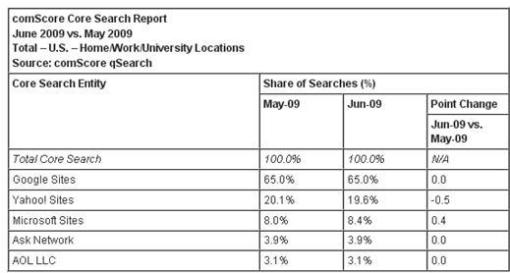
 Internet is believed to be one of the most measurable mediums; however, the fact that almost everything on the internet can be measured makes understanding internet measurement all the more complex. There are several methods of measuring audiences online; however, none of these methods in isolation give one a complete understanding of online activity.




 MICA Students on Media